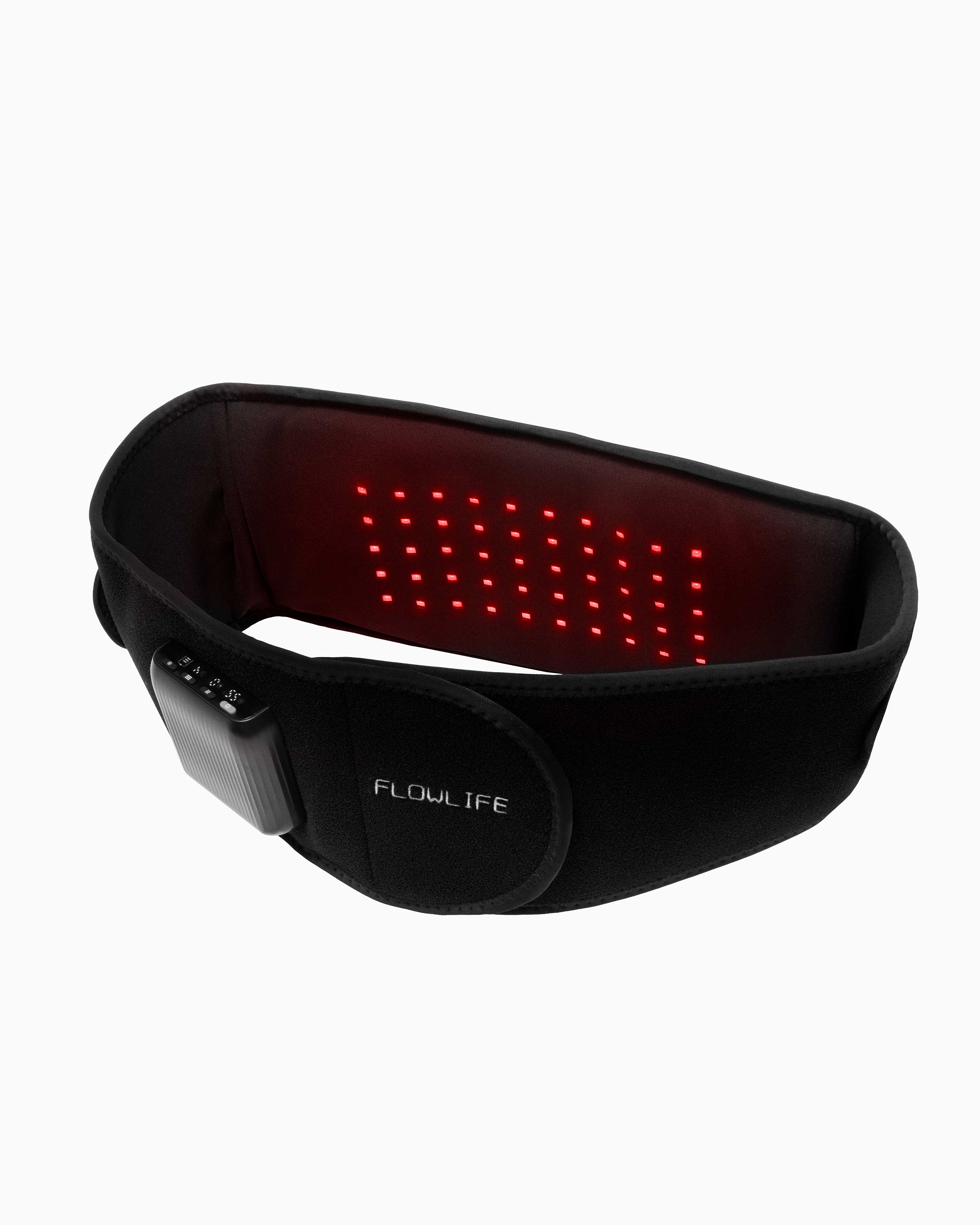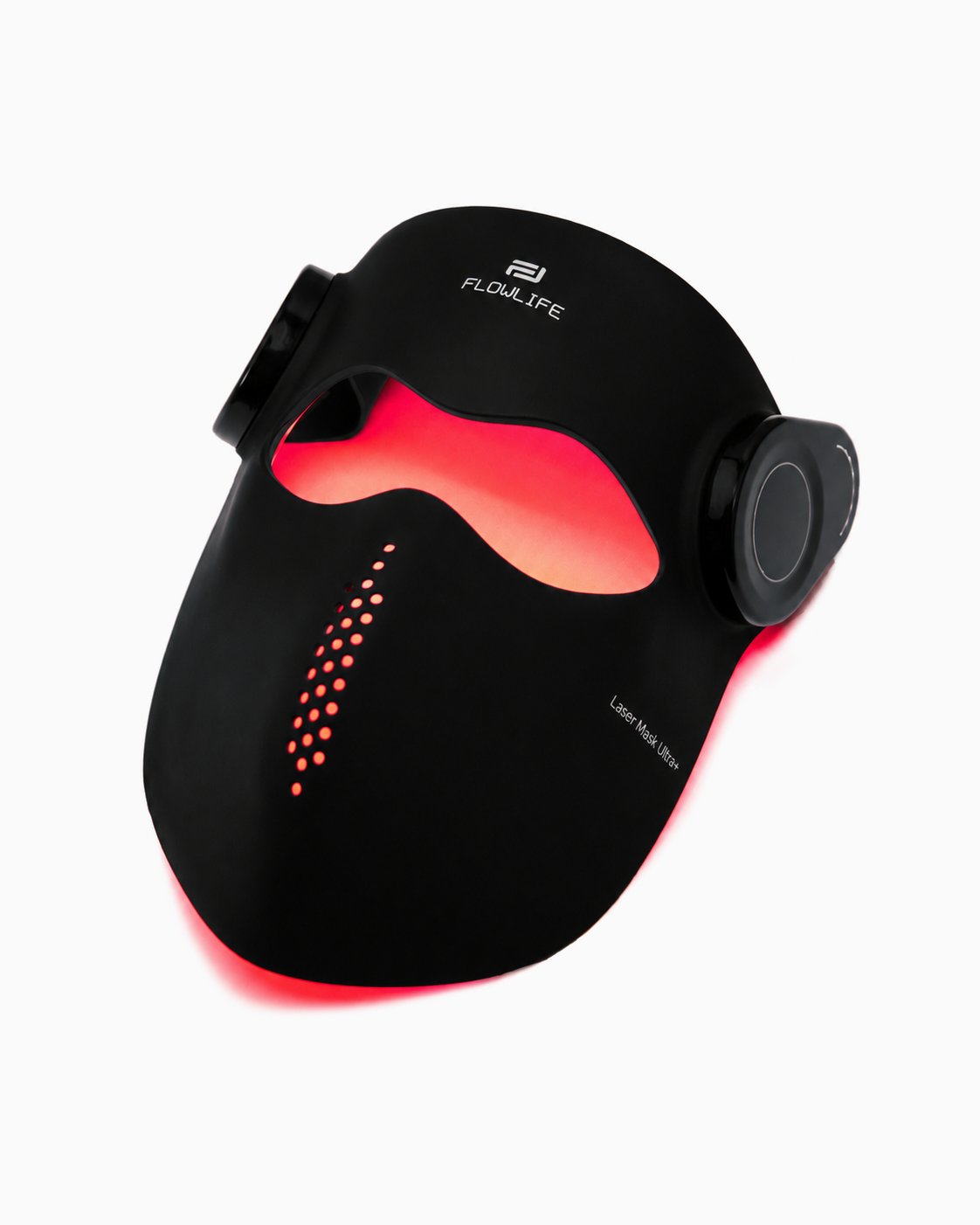
Flowlight Laser Mask Ultra+ Four Waves
Red Light MasksNew
6 999 NOK
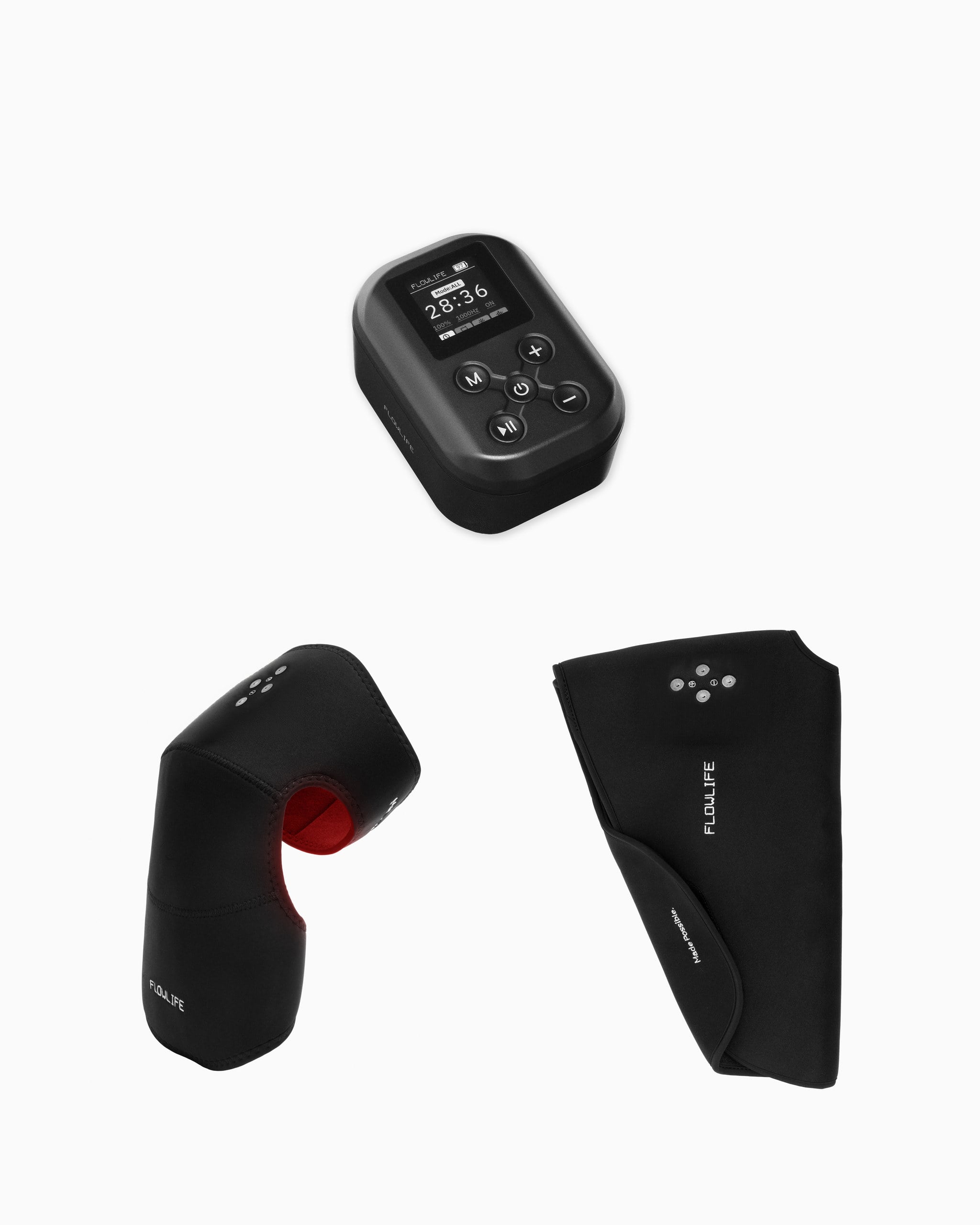
Flowlight Wearable Foot & Knee + Motor Kit
4 497 NOK3 497 NOK


4 497 NOK3 497 NOK
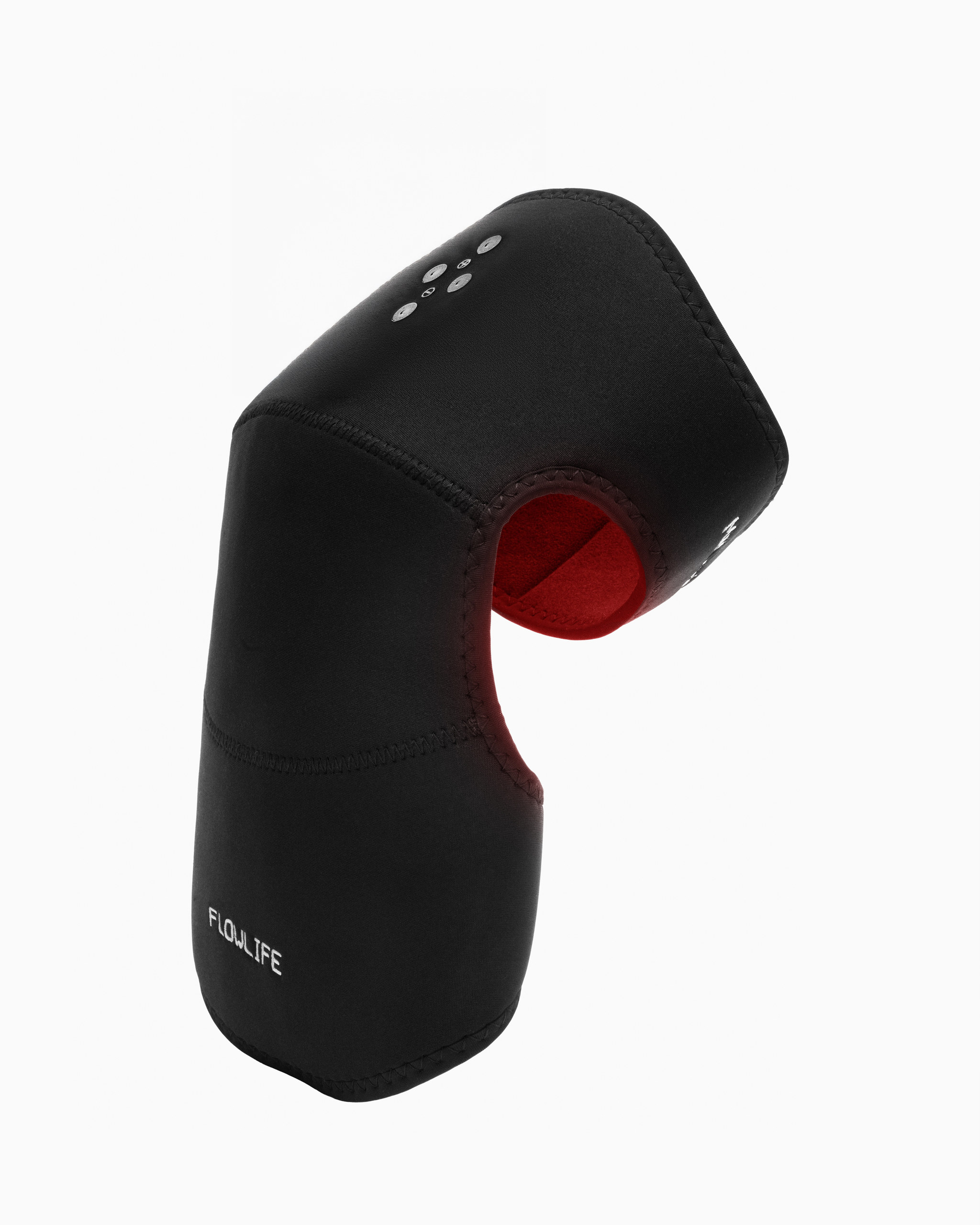
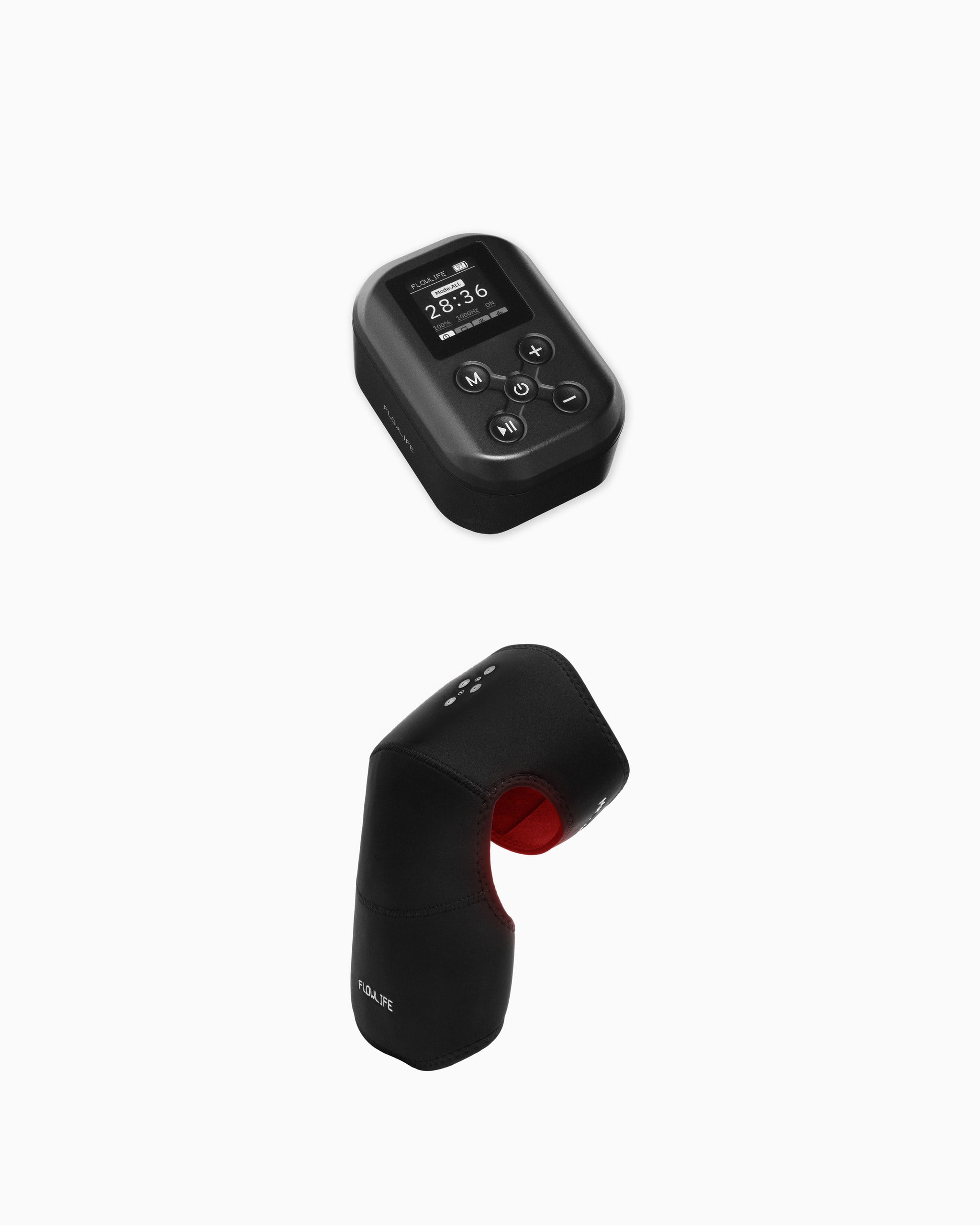
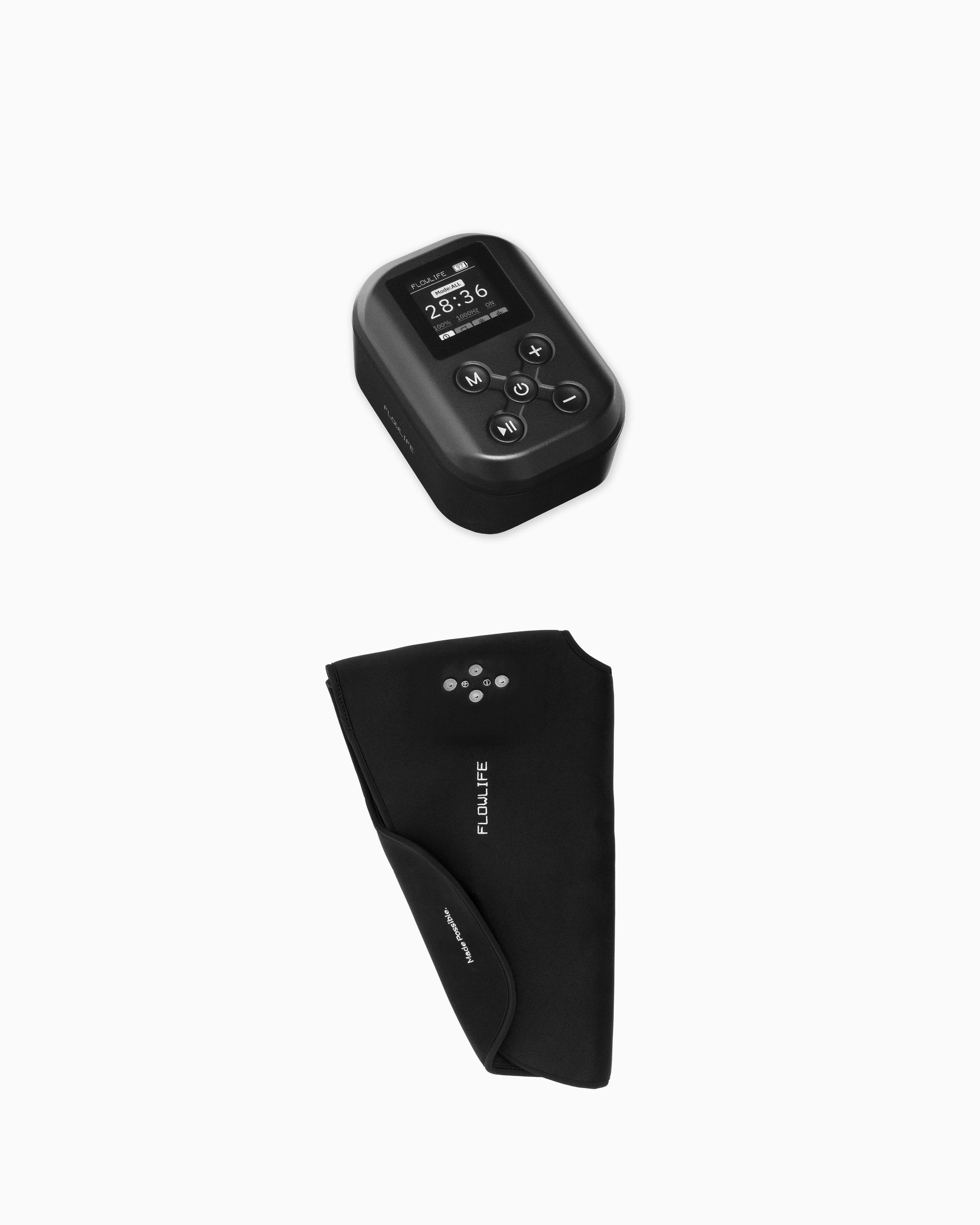
Complete wearable system for foot and knee with 660 nm red and 850 nm near infrared light, including the controller that powers both wraps.

1 499 NOK
1 499 NOK
1 499 NOK
2 998 NOK2 498 NOK
2 998 NOK2 498 NOK
4 497 NOK3 497 NOK
Please enable JavaScript to purchase this product
1 499 NOK
1 499 NOK
1 499 NOK

Charge the controller over USB-C before first use, which takes about 2.5 hours. The screen shows 100% when it is full.
Charge the controller over USB-C before first use, which takes about 2.5 hours. The screen shows 100% when it is full.
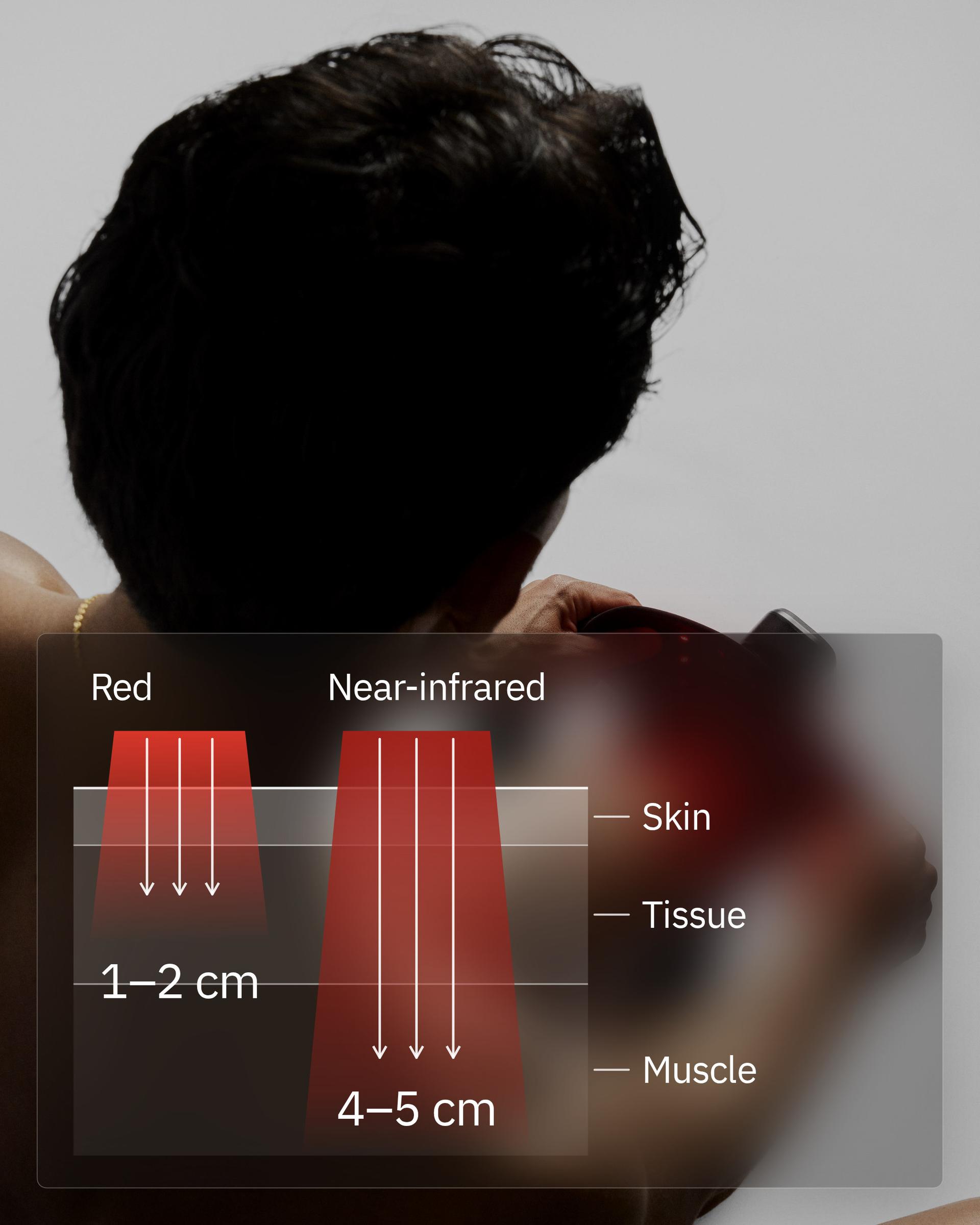
Light does not stop at the surface of the skin. How far it travels depends on its wavelength. Red light, 660 nm, is absorbed within the first 1 to 2 cm, the layer with the skin, small blood vessels, scars and surface inflammation. Near-infrared, 850 nm, passes through the skin and the tissue beneath it and reaches 4 to 5 cm, down to muscle, tendon and joint.
The difference comes from how light behaves in the body. Shorter wavelengths scatter more and are taken up close to the surface. Longer wavelengths pass through water and blood with less absorption, so they travel further in. That is why near-infrared is the relevant range for deep muscle and joints, while red light does most of its work in and just below the skin.
Flowlight Wearables combines red light at 660 nm with near-infrared at 850 nm. In one session the light reaches both the skin and the deeper tissue below. The two wraps sit in direct contact with the knee and the foot, so the light reaches each area evenly at about 120 mW/cm².
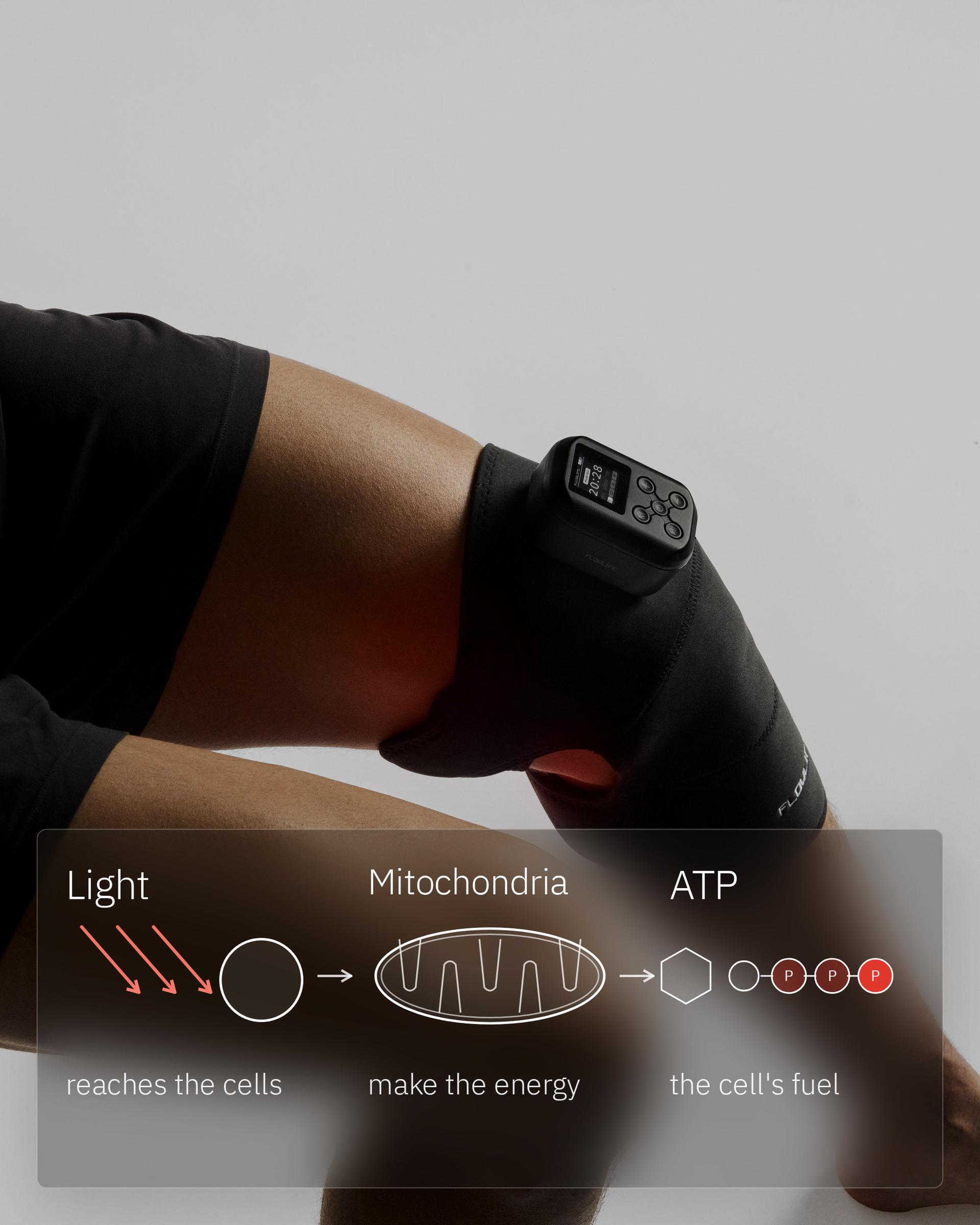
Almost every cell in the body contains mitochondria, small structures that turn nutrients and oxygen into energy the cell can use. That energy is stored in a molecule called ATP, adenosine triphosphate. When the cell needs energy, it releases one of the three phosphate groups and the energy goes to work.
Every process in the body runs on ATP, from muscle contraction to the repair of damaged tissue. After hard training, an injury or long-term strain, demand rises and cells can fall behind. Inflammation lingers and recovery slows.
Red and near-infrared light is absorbed inside the mitochondria by an enzyme called cytochrome c oxidase, and ATP production goes up. Nothing new is added to the body. The tissue simply gets more energy for the repair it was already trying to do. The process is called photobiomodulation, one of the most studied non-pharmaceutical methods in sports medicine and rehabilitation.
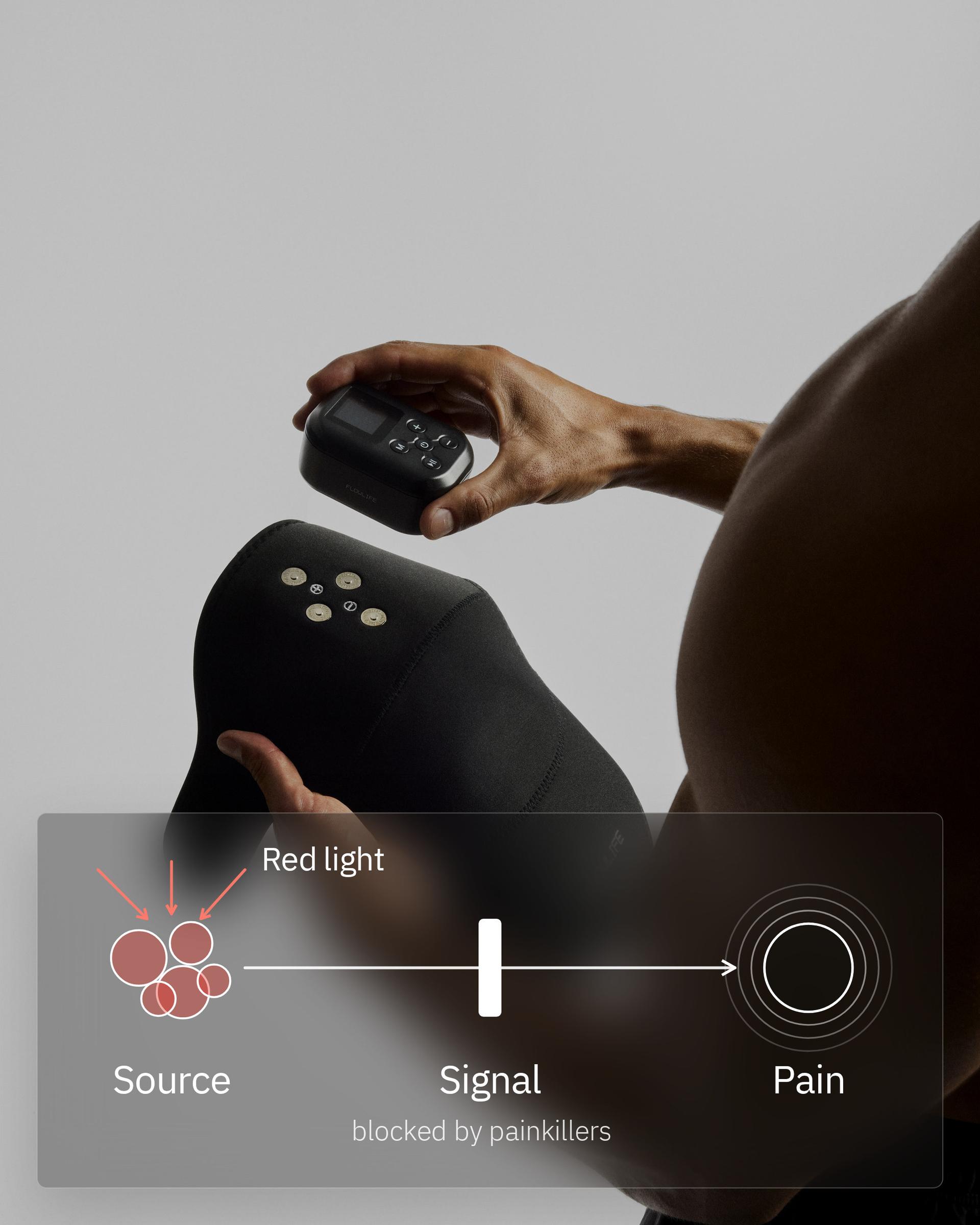
Pain is a signal. Something in the tissue, such as inflammation, oxidative stress or poor circulation, sends a message to the brain that something needs attention. A painkiller works on that message. It dampens the signal, but the source is still there.
Red light works one step earlier, at the source. When cells get more energy, inflammatory signals can settle, oxidative stress drops and circulation improves. With less going on at the source, there is less to send a signal about.
Because it works on the cause rather than the message, the effect builds more slowly than a tablet, and it tends to last longer. Acute pain can respond within 24 to 72 hours. Chronic pain usually needs 4 to 8 weeks of consistent use before the difference is clear. Red light can be used alongside other treatment, but it does not replace medical care for persistent or unexplained pain.
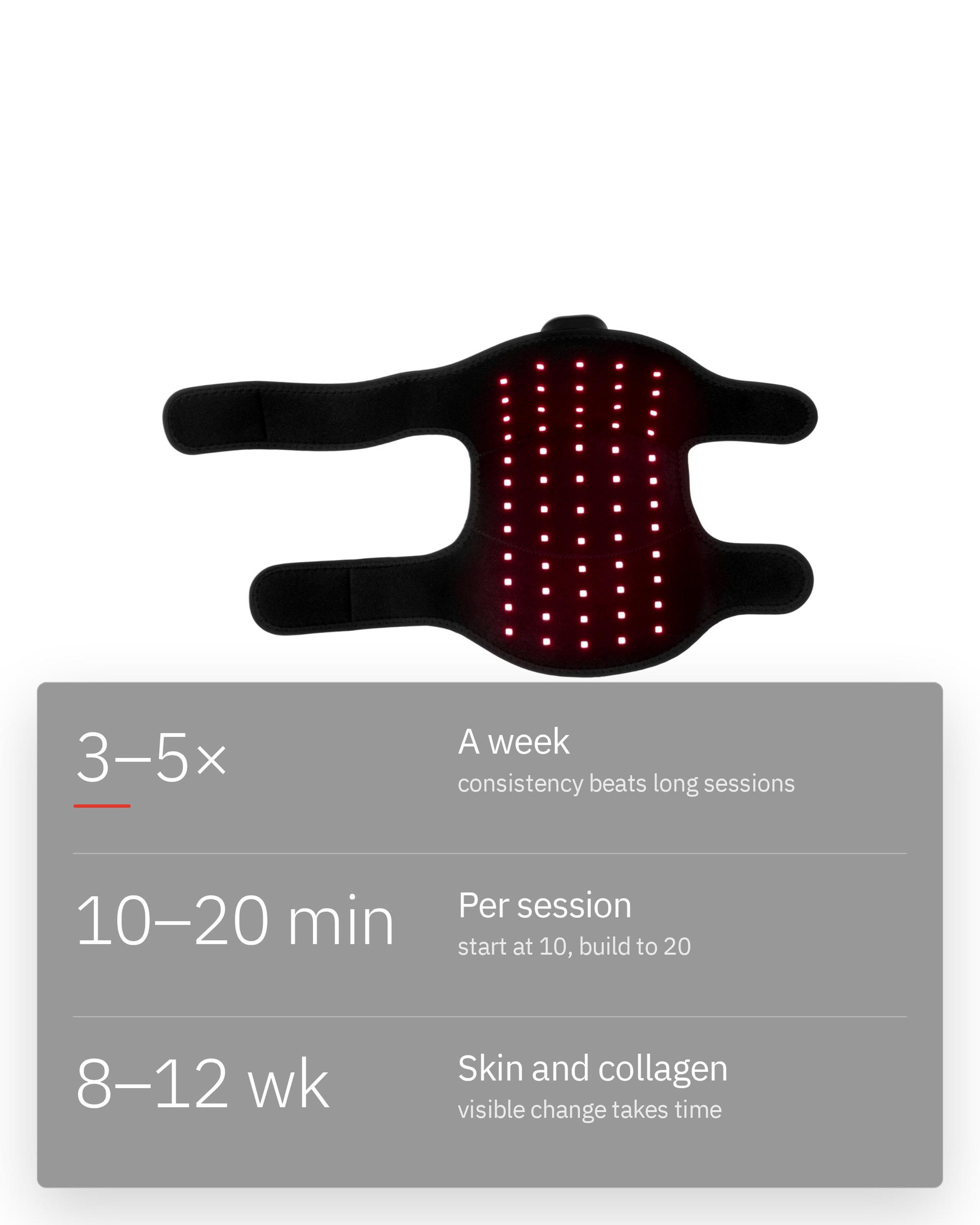
Ten to twenty minutes is the window. Start at ten minutes. Go up to twenty for larger areas or deeper targets, and stop there. Longer sessions do not add more effect, because cells respond to the right dose, not to as much light as possible.
What changes the result is how often, and for how long, you keep going. Three to five sessions a week works well. Each session builds on the one before, and the benefit accumulates over weeks rather than minutes. Daily use is safe if you want to use it more often.
Different goals take different amounts of time. Acute soreness can respond within 24 to 72 hours. Joint comfort and chronic pain usually take 4 to 8 weeks. Skin and collagen take eight to twelve weeks before the change is visible. The timer on Flowlight Wearables runs from 1 to 30 minutes, so it is easy to repeat the same session every time.
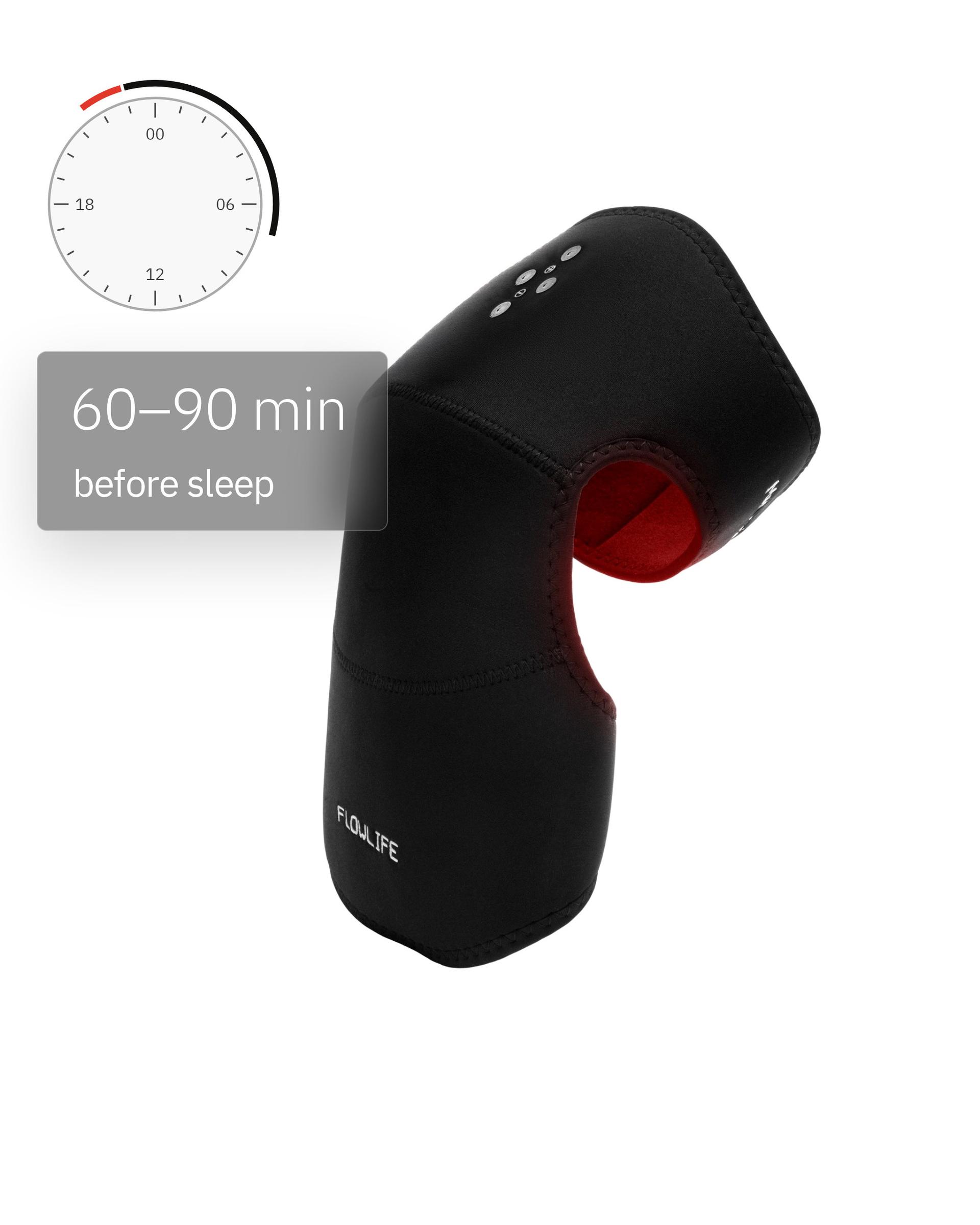
The body's internal clock is set by light. In the evening the brain starts releasing melatonin, the hormone that prepares the body for sleep. Blue and green light from phones, laptops and TVs pushes melatonin down and keeps you alert.
Red and near-infrared light does not have that effect. That makes an evening session a good fit, ideally 60 to 90 minutes before bed. A session in a dim room can become a calm part of winding down.
A morning session works too. Early in the day, the light can be part of a routine for alertness rather than wind-down. What matters most is choosing a time you can keep, so the sessions stay regular week after week.